- The Next Big Rush
- Posts
- 🔋 The Missing Piece in the Battery Narrative
🔋 The Missing Piece in the Battery Narrative

Fabi Lara
March 22, 2026
👷♀️ Greetings, Contrarian!
Most investors are still chasing lithium.
Some have moved to graphite. A few to nickel.
But almost no one is talking about what actually holds LFP batteries together:
Phosphate — ~60% of the cathode. Lithium is only ~4%.
That disconnect is where things start to get interesting.
A Québec-based company building around a very specific idea:
High-purity phosphate is not a fertilizer story anymore — it’s a battery materials story.
And not all phosphate qualifies.
🪨 Not All Phosphate Is Created Equal
Globally, most phosphate is:
Sedimentary
Built for fertilizers
Impure for battery applications
What First Phosphate Corp. controls is different:
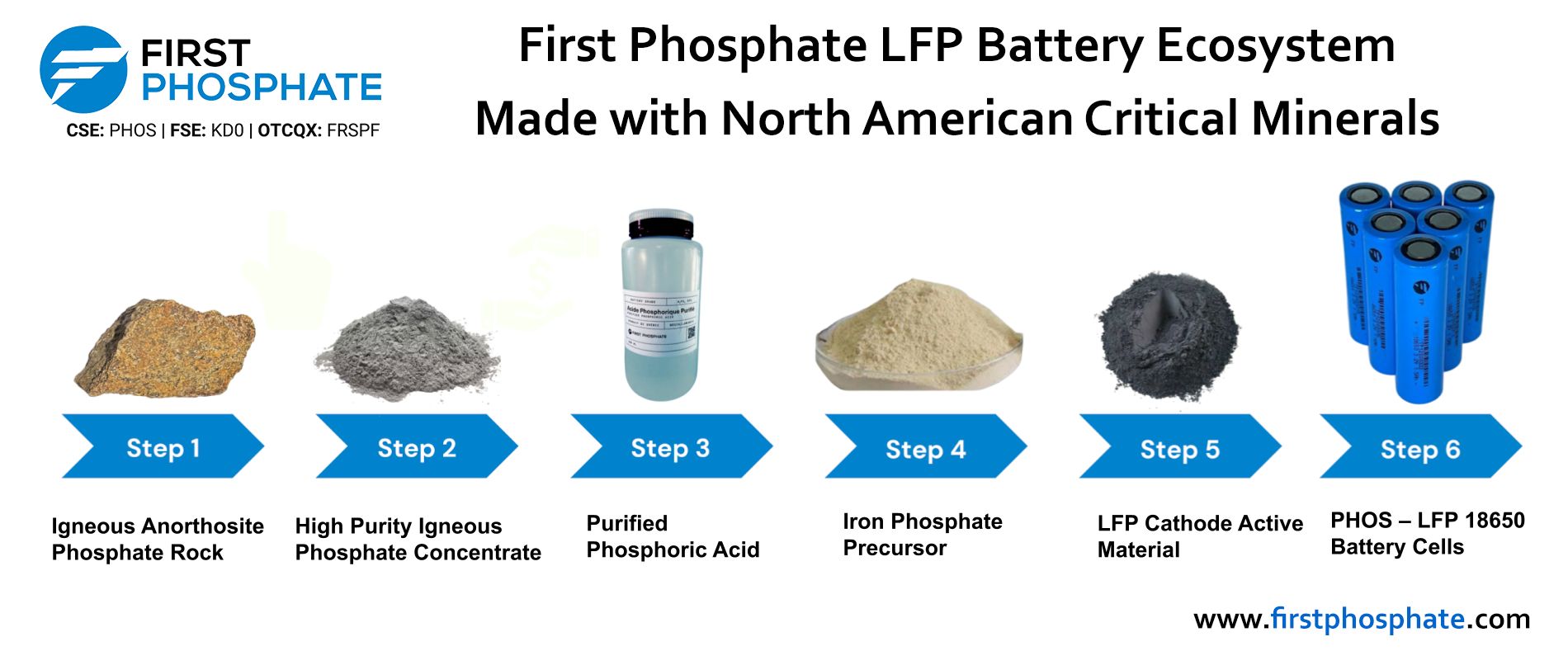
Igneous phosphate (anorthosite) — only ~5% of global supply
Why this matters:
Higher purity from the start
Fewer contaminants
Can be converted directly into battery-grade phosphoric acid
Contrast that with the traditional route:
Fertilizer producers must process large volumes of low-grade material
just to extract a small portion suitable for batteries.
This is a structural inefficiency.
And potentially, an opportunity.
⚡ The LFP Shift Is Already Happening
The narrative that LFP is “emerging” is outdated.
LFP already represents ~75% of global battery production
Key drivers:
Lower cost
Longer lifespan
Safer chemistry
China dominates this supply chain.
The West is trying to catch up — fast.
🌎 A Coming Supply Gap
Here’s the bottleneck forming beneath the surface:
Western production of purified phosphoric acid is ~1–1.5M tons/year
Future demand could reach 3–10M tons by 2035
At the same time:
Existing supply is tied to food, industrials, and fertilizers
Battery-grade material is a small, secondary output
In other words:
The system wasn’t built for batteries.
🏗️ The Strategy: Skip the Bottleneck
First Phosphate Corp. is taking a different approach:
The Bégin-Lamarche high-purity igneous phosphate deposit
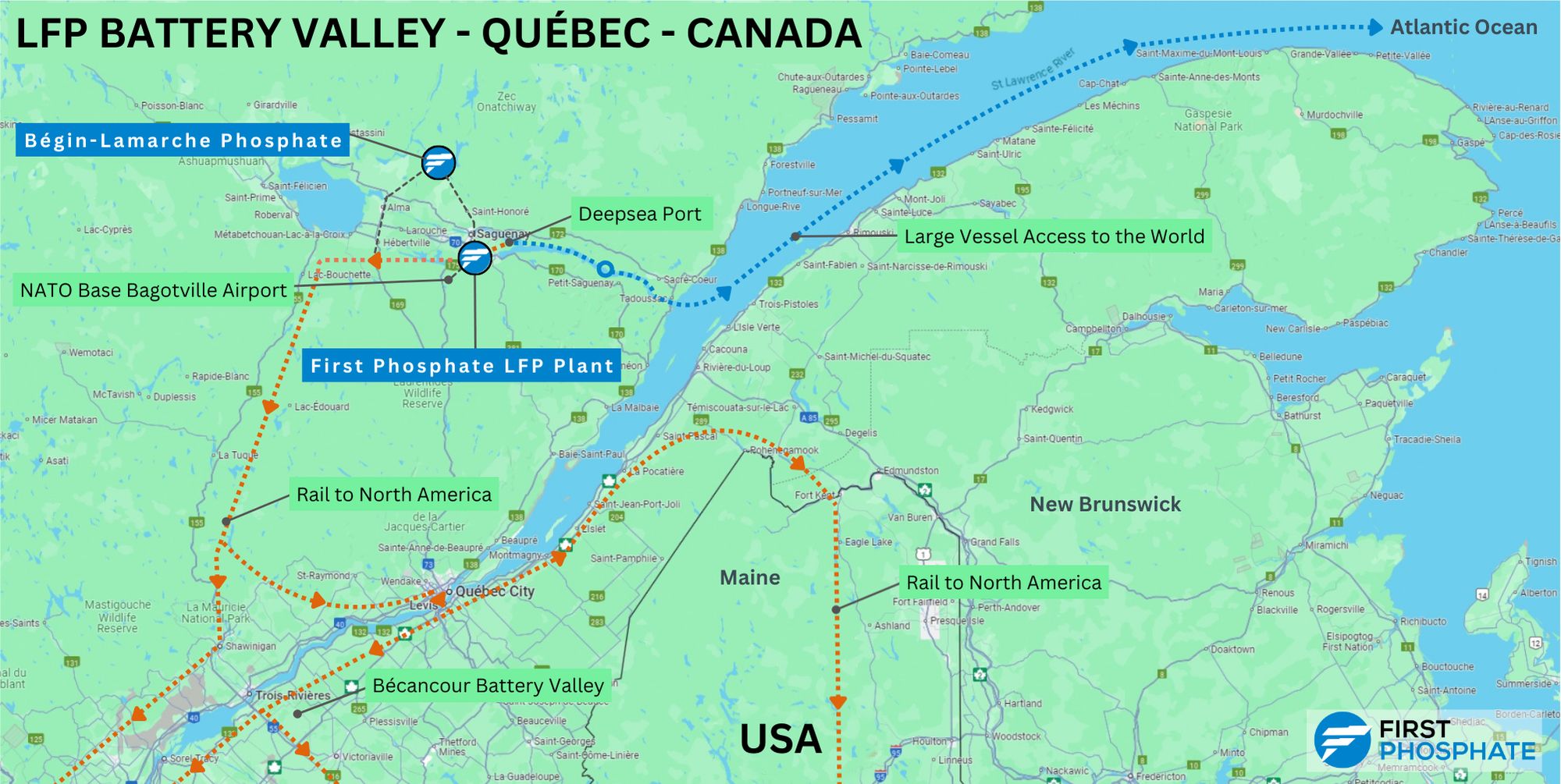
Build from rock → directly to battery-grade phosphoric acid
No fertilizer detour.
No dependence on legacy supply chains.
This is effectively a purpose-built input for LFP batteries.
📊 The Market Disconnect
Despite the macro setup, the market hasn’t caught up.
From the interview:
Company trades at ~5% of its NPV
Typical critical mineral comps: ~20% (or higher in “hot” sectors)
Why?
Phosphate isn’t “trendy”
Few direct comparables
Market is opaque and hard to track
Meanwhile:
There are ~150 lithium companies.
Almost none focused on battery-grade phosphate.
🧠 A Different Kind of Asymmetry
This isn’t just a commodity bet.
It’s a positioning mismatch:
Investors are crowded in lithium
Capital is flowing into known narratives
A critical input is being overlooked
As one insight from the discussion highlights:
You can’t build LFP batteries without phosphate — regardless of lithium supply.
⚠️ What Could Go Wrong
This is still a development-stage story.
Key risks:
Execution (mine + chemical processing)
Capital intensity
Market education (phosphate still misunderstood)
Timing of Western LFP buildout
There’s also a broader reality:
The market may take time to recognize the importance of phosphate.
🧭 Bottom Line
The battery narrative is evolving.
But capital is still concentrated in the obvious places.
If LFP continues to dominate:
The constraint may shift from lithium
to high-purity phosphate supply
And companies like First Phosphate Corp. are positioning early — before that realization becomes consensus.
🎥 Go Deeper
Phosphate isn’t a crowded trade.
It’s not even a well-understood one.
But that’s exactly where asymmetric opportunities tend to emerge.
If you want to understand:
Why high-purity phosphate is fundamentally different
How it goes from rock → battery-grade material
And why First Phosphate Corp. believes this could become a critical bottleneck
We break it all down in this conversation with CEO John Passalacqua.
📌 Watch the full interview below.

How Are We Doing?Today's mining news was: |
Happy Speculating!
The Editor
DISCLAIMER: None of this is financial advice. This newsletter is strictly educational and is not investment advice or a solicitation to buy or sell any assets or to make any financial decisions. The company mentioned is a paid marketing consulting client,
and as a result we are biased. Please be careful and do your own research.
Would you like to update how frequently you receive our emails? 📬